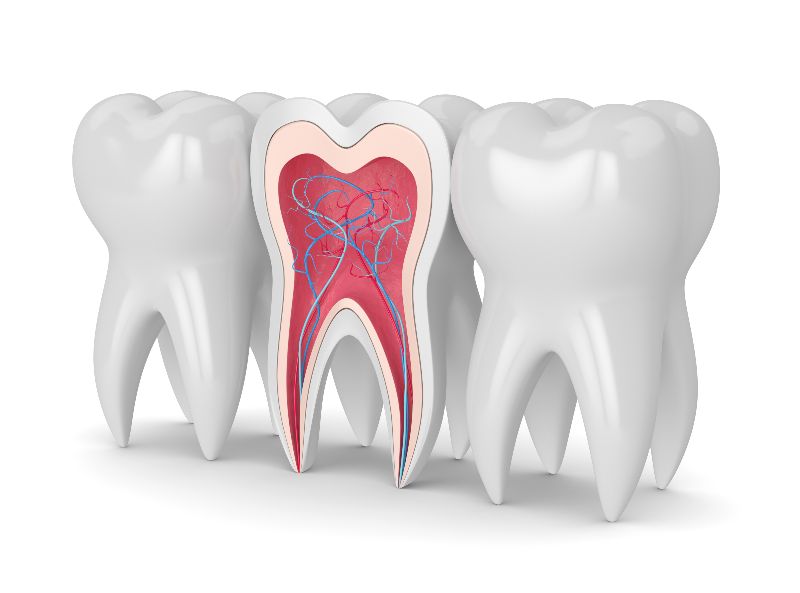
Yes. A failed root canal on an upper back tooth can cause a sinus infection. The roots of the upper molars and premolars sit just below the maxillary sinus, so infection left at the tip of a root can spread into the sinus lining. Dentists call this maxillary sinusitis of endodontic origin. A successful root canal does the opposite: it removes the infection before it can reach the sinus.
The tricky part is that the tooth often does not hurt. The American Association of Endodontists notes that these cases are easy to overlook because many patients have no dental symptoms at all. If sinus trouble keeps coming back on one side, the teeth on that side deserve a closer look.
How a Tooth Can Cause a Sinus Infection
In many people, only a thin layer of bone separates the roots of the upper back teeth from the floor of the sinus. When bacteria infect the pulp inside one of those teeth, the infection can build up at the root tip and push into the sinus. That can happen with a deep cavity or cracked tooth that was never treated, or with a tooth that already had a root canal that did not fully clear the infection. Finding the tooth behind a sinus problem starts with a comprehensive exam in restorative dentistry that checks each upper back tooth on the affected side.
Treating the tooth removes the source. According to the AAE, root canal treatment often resolves this type of sinusitis, though some patients also need medical treatment from their physician or an ear, nose, and throat specialist.
Why a Root Canal Can Fail
Most root canals last for many years. When one fails, the cause is usually one of these:
- A missed or partially cleaned canal. Upper molars often have three or four canals, and some are small and curved.
- A leaking crown or filling. If the seal breaks down, bacteria can get back inside the tooth.
- New decay or a crack in the treated tooth.
- A long delay before the final crown, which leaves the tooth exposed.
Our article on whether a root canal can get infected again covers warning signs in more detail, and how long root canals last explains what helps them hold up.
Signs Your Sinus Problem Might Come From a Tooth
A sinus infection linked to a tooth tends to look a little different from one caused by a cold or allergies. It usually affects one side, with congestion, pressure, or pain over a single cheek. The drainage may have a bad taste or smell, and symptoms often improve on antibiotics only to return once the course ends.
Your dental history is a clue too. A root canal, large filling, or crown on an upper back tooth on the same side makes a dental source more likely. The tooth may feel tender when you bite down, but many people feel nothing in the tooth at all. If any of this sounds familiar, mention it to both your dentist and your physician.
Is Sinus Pressure Normal After a Root Canal?
Some is. After treatment on an upper back tooth, mild sinus pressure or minor drainage for a few days is common while the tissue around the root heals. It should get a little better each day.
Pressure that lasts more than a week, gets worse, or comes with fever, facial swelling, or thick drainage is not typical. Rarely, the thin bone between a root and the sinus is breached during treatment, or filling material ends up close to the sinus floor. Your dentist can check for that with imaging.
How Dentists Diagnose and Treat It
Diagnosis starts with an exam, bite and tapping tests, and X-rays of the suspect tooth. Standard X-rays can miss what is happening at the sinus floor, so a 3D cone beam CT scan is often the clearer way to see the roots and the sinus together. JAX Dental Studio has cone beam CT imaging in the office.
Treatment depends on the tooth:
- Root canal therapy for an infected tooth that has not been treated yet.
- Retreatment of a previous root canal, which cleans and reseals the canals.
- Surgery at the root tip or extraction when the tooth cannot be saved with retreatment.
Once the source is gone, sinus symptoms often clear up. If they do not, your dentist and physician can work together on the next step.
Root Canal Care at JAX Dental Studio
Dr. Charles Poblenz, DMD completes most root canals in a single appointment of about 60 to 90 minutes, and molars or complex cases may need a second visit. If you have one-sided sinus symptoms and a history of dental work on that side, an exam can rule the tooth in or out.
To schedule an evaluation, request an appointment online or call (904) 396-4091. Our office is at 3647 Hendricks Ave in San Marco, Jacksonville.
Frequently Asked Questions about Failed Root Canal Sinus Infection
Can a root canal procedure cause sinus pain?
It can cause mild, short-term sinus pressure when the tooth is an upper molar or premolar, because the roots sit close to the sinus floor. That pressure usually settles within a few days as the area heals. Pressure that lasts more than a week or gets worse should be checked.
How can a root canal treatment help with tooth pain caused by an infected dental pulp?
A root canal removes the infected or inflamed pulp, disinfects the canals, and seals them so bacteria cannot return. With the source of infection gone, the pain and pressure it caused usually fade. A crown or filling then protects the tooth.
Can a tooth infection lead to sinus pressure?
Yes. An infection at the root tip of an upper back tooth can spread into the maxillary sinus and cause pressure, congestion, and drainage, usually on one side. Dentists call this maxillary sinusitis of endodontic origin, and treating the tooth often clears it.
Why is it important to remove all the infected tissue during a root canal procedure?
Bacteria left in a missed or poorly cleaned canal can keep the infection going at the root tip. In an upper back tooth, that lingering infection can reach the sinus. Thorough cleaning and a well-sealed crown or filling are what keep a root canal from failing.
How do I know if I have a sinus infection after a root canal procedure?
Mild pressure for a few days after treatment on an upper tooth is normal. Signs of a true infection include congestion or pain on one side that lasts more than a week or keeps returning, thick or bad-smelling drainage, fever, or facial swelling. A dental exam with imaging can show whether the tooth is the source.
What is sinus communication and how does it differ from a sinus infection?
A sinus communication is an opening between the mouth and the maxillary sinus. It is most often linked to removing an upper back tooth and is rare with a root canal. Signs include liquid passing into the nose when you drink. A sinus infection is inflammation of the sinus lining, which can come from a tooth, a cold, or allergies. Both need a dentist’s evaluation if they do not settle quickly.
Can an infected tooth cause sinus problems before the root canal is performed?
Yes. A deep infection in an upper molar or premolar can affect the sinus before any treatment, and the tooth may not even hurt. Treating the tooth with a root canal removes the source, and sinus symptoms often improve once it is treated.
How can I tell if my post-root canal symptoms are normal or require medical attention?
Mild tenderness and slight sinus pressure that improve each day are normal for the first few days. Call your dentist if pain or pressure gets worse, lasts more than a week, or comes with fever, facial swelling, or thick drainage. If a sinus infection is confirmed, your dentist and physician may work together, since some cases need medical treatment as well.