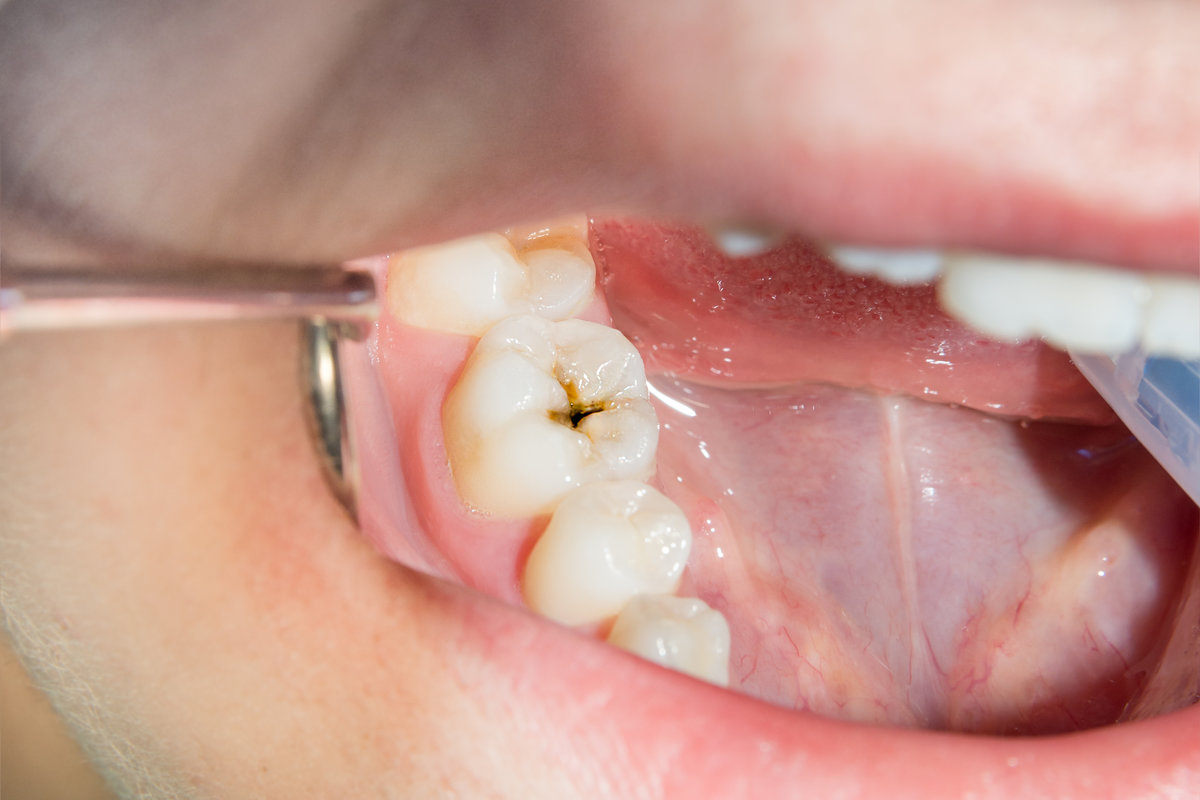
Every time you eat or drink, you set off a biological process inside your mouth that can either protect your teeth or slowly destroy them. Tooth decay is one of the most widespread chronic conditions in the United States, and cavities are its most visible result. Understanding what drives that process and how to stop it is one of the most valuable things you can do for your long-term oral health.
At JAX Dental Studio, we work with patients throughout Jacksonville to build strong preventive habits and catch problems before they become painful. Our preventive dentistry services are designed to keep your teeth healthy at every stage of life, and that starts with education about what causes cavities in the first place.
What Actually Causes a Cavity?
Cavities form through a process that begins with bacteria. Your mouth is home to hundreds of bacterial species, and some of them feed on the sugars and starches left behind after you eat or drink. When these bacteria consume those food particles, they produce acid as a byproduct. That acid attacks the outer enamel layer of your teeth, gradually weakening it.
Your saliva acts as a natural defense, rinsing away acid and delivering minerals that help restore enamel. However, if acid attacks happen more frequently than your saliva can handle, the balance tips. Over time, weakened enamel breaks down and a hole forms. According to the Centers for Disease Control and Prevention, 1 in 5 adults aged 20 to 64 currently has at least one untreated cavity, making this a concern that goes far beyond childhood.
What Are the Risk Factors for Tooth Decay?
Certain habits and conditions make some people more vulnerable to cavities than others. Knowing your risk factors helps you and our team put a more targeted plan in place.
Some of the most common contributors to tooth decay include:
- Frequent sugar and acid consumption: Sipping sugary drinks throughout the day keeps your enamel under near-constant attack, giving your saliva little time to recover
- Poor oral hygiene: Infrequent brushing and skipping floss allows plaque to accumulate and harden into tartar, which traps bacteria against your teeth
- Dry mouth: Saliva is your mouth’s primary defense against acid; reduced saliva flow from medications or medical conditions removes that protection
- Deep grooves in back teeth: Molars have pits and fissures where food and bacteria collect and are difficult to remove with a toothbrush alone
- Gum recession: When gum tissue pulls back, it exposes root surfaces that lack enamel and are far more vulnerable to decay
Understanding which of these factors affects you most is a key part of the conversations we have with patients during routine visits.
How Can You Prevent Cavities?
Prevention is where patients have the most control. A consistent daily routine combined with professional care creates the strongest possible defense against decay.
Does Brushing and Flossing Really Make a Difference?
Brushing twice a day with fluoride toothpaste and cleaning between your teeth once a day removes the bacterial film that produces decay-causing acid. These habits reduce plaque buildup before it can harden into tartar, which can only be removed professionally. Fluoride also strengthens enamel by helping it absorb minerals more effectively, making your teeth more resistant to future acid exposure. Our fluoride treatments provide an added layer of protection for both children and adults who may be at higher risk.
Are There Dental Treatments That Help Prevent Cavities?
Yes, and they are more effective than most people realize. Dental sealants are thin protective coatings applied to the chewing surfaces of back teeth, sealing off the grooves where bacteria tend to collect. Regular professional cleanings through our general dentistry services remove tartar buildup and allow us to identify early signs of decay before a cavity fully forms. When caught early enough, decay can sometimes be halted before it requires a filling.
What Happens If a Cavity Does Develop?
Catching a cavity early makes treatment significantly more straightforward. Small areas of decay are treated with dental fillings, which restore the tooth’s structure and prevent the decay from advancing further. If a cavity is left untreated, the damage can reach the inner pulp of the tooth, leading to infection, significant pain, and the potential need for more involved treatment. The earlier a cavity is identified, the simpler and less costly the solution tends to be.
Protect Your Smile at JAX Dental Studio
At JAX Dental Studio, we believe prevention is the most powerful tool in dentistry. Dr. Charles Poblenz is a committed member of the American Dental Association, the Academy of General Dentistry, and the American Academy of Cosmetic Dentistry, and he brings that dedication to every patient he sees in our Jacksonville office. We combine thorough professional care with honest, practical guidance so you leave every appointment better equipped to protect your teeth at home.
Cavities are largely preventable, and with the right habits and support, you can keep your smile healthy for the long term. Schedule your next visit by filling out our contact form and take the first step toward a cavity-free future.